Sandra Soto, an electronic artist and educator from Buenos Aires, led CC Fest’s Spanish-language workshop. She came to technology through art and experimentation, and since 2012 has worked in schools as a technology facilitator, supporting teachers on projects and teaching children programming. She began with context: technology in schools needs more than tools. It starts with the community a school serves, then infrastructure such as the institutional accounts Buenos Aires schools use, then criteria for AI. She described a new annex to the city’s guidance that introduces AI progressively, with a teacher mediating for younger students before older students learn with it directly.
She framed programming as a third language. Primary students are learning the structure of Spanish and also learning English, and then she arrives with a language that is neither, one that helps people communicate with machines. She shared a project she first presented at a CC Fest teacher camp, in which sixth graders aged 10 and 11 learned p5.js through a unit on data and stories: coordinates and the canvas, shapes and color, then movement, then loading text data to make a word cloud. With very simple code, students produced images and interactions that summarized the stories they had read.
Participants were then invited to build an interactive creature in p5.js from geometric shapes, starting from her example. Her prompts mirrored classroom moves: make it respond to mouseX and mouseY, and “break the rule” by changing a value in working code to see what happens. The final step took the creature off the screen. Using the Make: AI Robots site, she trained classes in Teachable Machine, linked them through a MakeCode example to a micro:bit, and added a servo. On camera, her physical creature responded to the two classes she had trained.
She closed with a reflection on “atarlo con alambre,” an Argentine expression for making do and finding another way when materials run short, and a question echoing the keynote: if AI can write the code, what should we learn when we learn to code? Her answer was that students need prior knowledge and an understanding of AI’s risks before they can work and talk with it. She is completing a master’s thesis in electronic arts on links between textiles and the origins of computing.
Three takeaways
- Treat code as a third language. Students learning Spanish and English at the same time can see programming as another language with its own syntax (00:13:21–00:14:37).
- Break the rule. Giving students working code and asking them to change one value is a low-risk way into understanding it (00:24:28–00:29:08).
- Move from screen to world in small steps. Teachable Machine, MakeCode and a micro:bit let a sketch-based idea become a physical creature without heavy electronics (00:29:08–00:35:13).
Try it
Adapted from the workshop: draw a creature in p5.js using only circles, rectangles and lines. Make one part follow mouseX, then change one number in the code and describe what changed. If you have a micro:bit, follow the Make: AI Robots steps to trigger a movement from a Teachable Machine class.
Watch and explore
Replay: Watch on YouTube. The session was conducted in Spanish.
From the original program
Published before the event
La tecnología como lenguaje creativo: de la IA al código, del código al mundo físico.
¿Qué sucede cuando la IA se integra en nuestro repertorio de herramientas creativas? En esta sesión práctica, exploraremos la tecnología como lenguaje creativo, pasando del código generado por IA a p5.js, del código a la creación física y de la pantalla al mundo real mediante micro:bit.
About the presenters
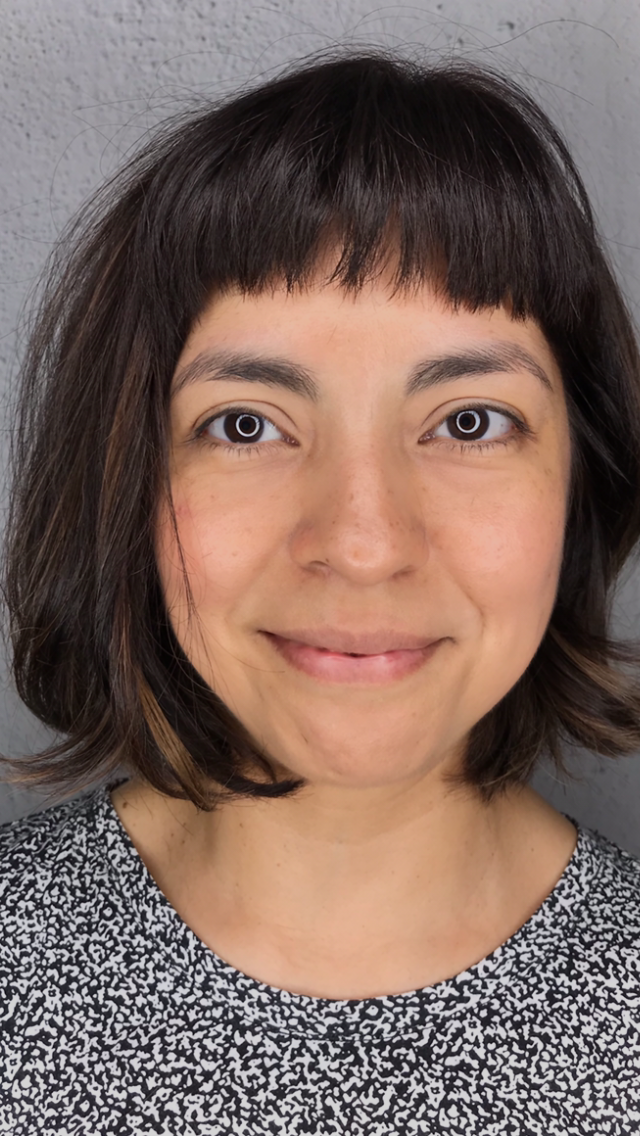
Sandra Soto
She
Sandra Soto, I’m an artist/educator and creative technologist from Buenos Aires, Argentina. I’ve been teaching programming and creative technologies since 2012, combining code, electronics, robotics, art, and education. I see technology as a creative palette and explore how AI can help students move from ideas to code, from code to making, and from making to new questions. (spanish version) Soy Sandra Soto, artista, educadora y tecnóloga creativa de Buenos Aires, Argentina. Imparto clases de programación y tecnologías creativas desde 2012, combinando código, electrónica, robótica, arte y educación. Concibo la tecnología como una paleta creativa y exploro cómo la IA puede ayudar a los estudiantes a pasar de las ideas al código, del código a la creación, y de la creación a nuevos interrogantes.