Lauren Lee McCarthy closed CC Fest’s anniversary gathering by connecting the origins of p5.js with a broader question: how can people shape their relationships with technology? Her account of starting p5.js emphasized uncertainty, collective learning, and participation. The project began with questions about bringing Processing to the web and widening who could contribute. Community statements, accessibility, and rotating leadership were part of the work of building the tool.
“You don’t need to be an expert. You don’t need to prove yourself before you get here.” Lauren Lee McCarthy, on participation in the p5.js community
That approach continued in her discussion of Social Software, the UCLA lab she co-founded with Casey Reas. She described software as a social and cultural practice, with room for artists, students, and people outside technical fields to help decide what tools should do. Opening Captions, developed with Alison O’Daniel, offered a concrete example: caption placement and styling can become expressive parts of a film.
McCarthy then turned to participatory artworks that make technological relationships tangible. In her human-assistant performance, she inhabited the role of a home automation system, exposing tensions between convenience, intimacy, privacy, and control. A saliva-exchange project invited people to set terms for sharing intimate biological material, making questions of data ownership physical. A vehicle project used collective singing and changing prompts to explore the experience of automation and giving up control.
The discussion returned to teaching and access. McCarthy described conversations with students as a source of energy and possibility, and pointed toward accessibility practices as ways to reconsider communication itself. Her closing invitation was to remain makers: people who bring their own values into tools and systems, and who can question the futures those systems imply.
Three takeaways
- An open tool also needs practices that invite people to participate: 00:04:04–00:08:21.
- Interfaces encode choices about relationships and control; participatory artworks can help people examine those choices: 00:12:03–00:25:45.
- Accessibility can shape artistic expression and provoke new questions about communication: 00:30:12–00:32:39.
Try it
Editorial suggestion: choose a familiar interface and list what it assumes about its users. Sketch one change that gives people more control or more ways to participate.
Watch and explore
Replay: Watch on YouTube
Links shared in the session chat:
About the presenter
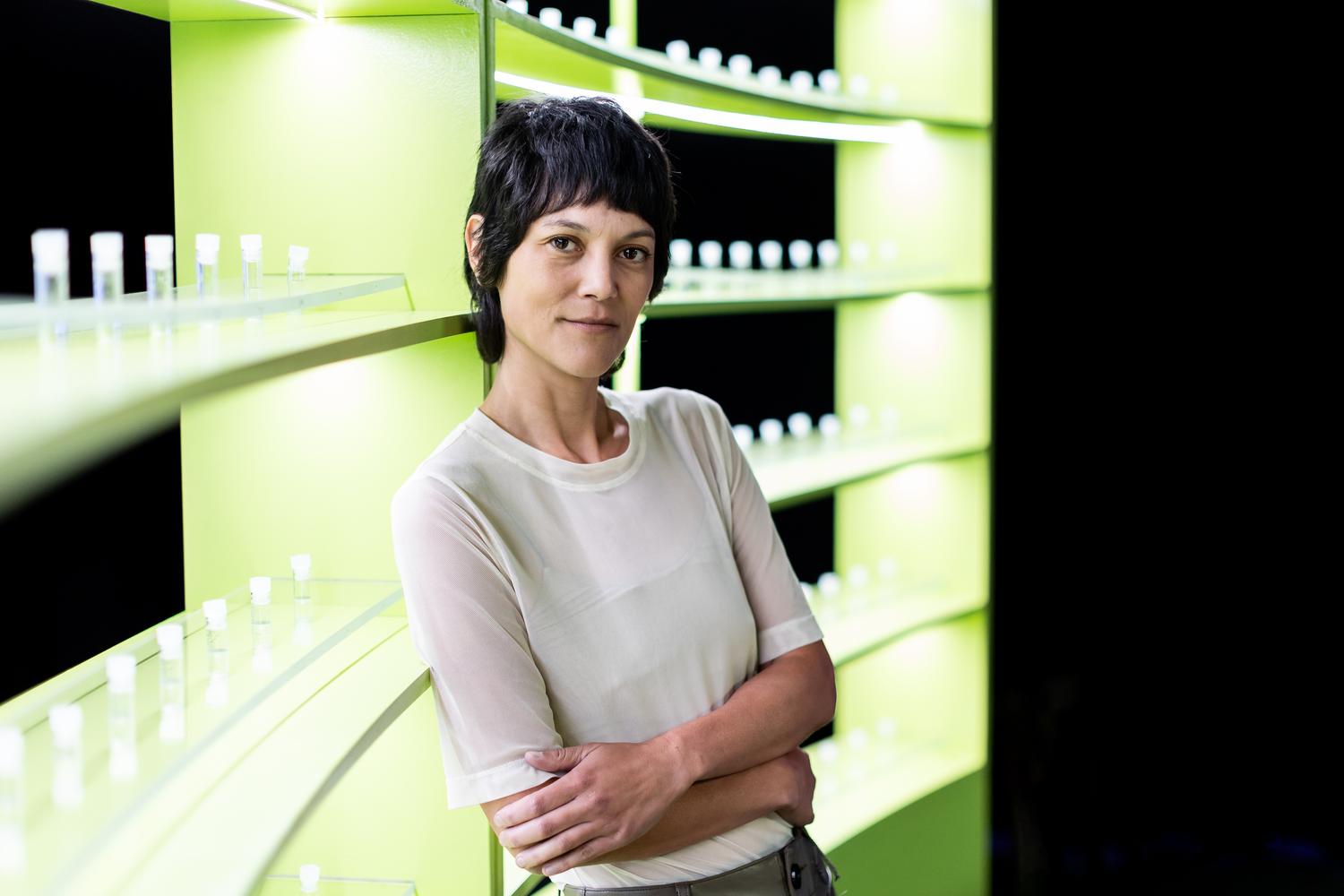
Lauren Lee McCarthy
Lauren Lee McCarthy is an artist, researcher, and educator whose practice examines how technologies shape social relationships, intimacy, and everyday life. Trained in both computer science and art, McCarthy is the creator of p5.js, the open source creative coding platform that has introduced millions of people worldwide to programming through artistic practice. She is Professor of Design Media Arts at UCLA and co-director, with Casey Reas, of the Social Software Lab, where art is used to question and reshape our relationships with technology.