Kemi Ukadike started from a personal experience: an AI assistant she uses for speech typing once drafted and tried to act on an email she had not asked for. Several participants said in chat that something similar had happened to them. Her question for the workshop was how to keep control of code and intention when AI tools are part of the process, and her answer drew on digital accessibility practice. If code has to follow accessibility rules such as WCAG, she argued, it also has to say clearly what it is for and what it is allowed to do.
She demonstrated with a p5.js playground set in UMADA, an Afrofuturist storyworld she is building, set 200 years in the future. Children altered by a secret lab live in a garden that works like a Faraday cage, or a sandbox in coding terms: anything can be added, but nothing leaves without permission. Participants could place objects, including glyphs from a sign-based language she designed, using mouse, touch, words or face tracking. Before adding anything they had to state an intention and write a description, and they could choose whether an object moves.
Partway through, a participant asked what the schema card was. Ukadike explained that it grew out of moving her work between ChatGPT, Claude, Gemini and other tools and losing details each time. A schema card records each object’s purpose, description, text alternative, controls and permissions, along with the code, so the requirements travel with the work. The playground lets participants download their own card.
The discussion turned to how she builds tools like this. Ukadike, who learned p5.js at ITP and worked as a journalist before that, described herself as a strong editor and said AI assistance lets her build accessible tools much faster, while still requiring her to check and debug what it produces. In response to a question about writing descriptions for creative work, she recommended starting simple, since you do not know who will encounter the work, and adding sophistication only where the work needs it.
Three takeaways
- State intention in the code. Requiring a purpose and description before an object enters the sketch makes the work easier to review, for people and for AI tools (00:17:36–00:19:08).
- Keep requirements portable. A schema card holds accessibility and permission requirements alongside the code so they survive moves between tools and collaborators (00:22:54–00:25:59).
- Write descriptions for an unknown reader. Begin with the simplest accurate description and add complexity only when the work calls for it (00:47:06–00:50:14).
Try it
Editorial suggestion: take a small p5.js sketch you already have and, before changing any code, write one sentence of intention and one plain description for each shape on the canvas. Then try the workshop playground and compare your notes with the schema card it generates.
Watch and explore
Replay: Watch on YouTube
- Access Is the Interface playground (checked October 19; includes the printable field guide and schema card)
- Accessible by Design
- Kemi Ukadike on GitHub
- Further reading listed on the workshop page: WCAG 2.2; W3C, Making Content Usable for People with Cognitive and Learning Disabilities; Hamraie and Fritsch, Crip Technoscience Manifesto; Costanza-Chock, Design Justice; NIST AI Risk Management Framework.
From the original program
Published before the event
Access Is the Interface: Coding in the Age of AI
Access Is the Interface is a creative-coding session on the convergence of accessibility, AI, and governance. Through a live p5.js demonstration, participants will see how voice, speech, APIs, and agentic systems can transform intention into action—while keeping people able to review, direct, authorize, and stop what happens. The session invites artists and coders to treat access not as a feature added afterward, but as a design practice for accountable creative systems.
About the presenters
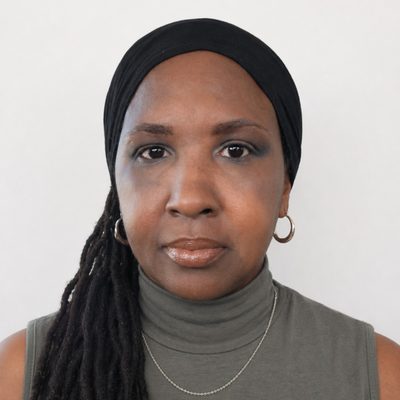
Kemi Ukadike
she/her/hers
Kemi Sijuwade-Ukadike is an artist, journalist, and creative-technology leader working at the intersection of accessibility, civic systems, and AI governance. She is founder of Small Systems Lab and previously led Artist Initiatives & Inclusion at Eyebeam. Her work asks how creative code can expand participation while keeping human intention, consent, and accountability at the center.