
Learning Machines: Text, Images, Video
What This Is
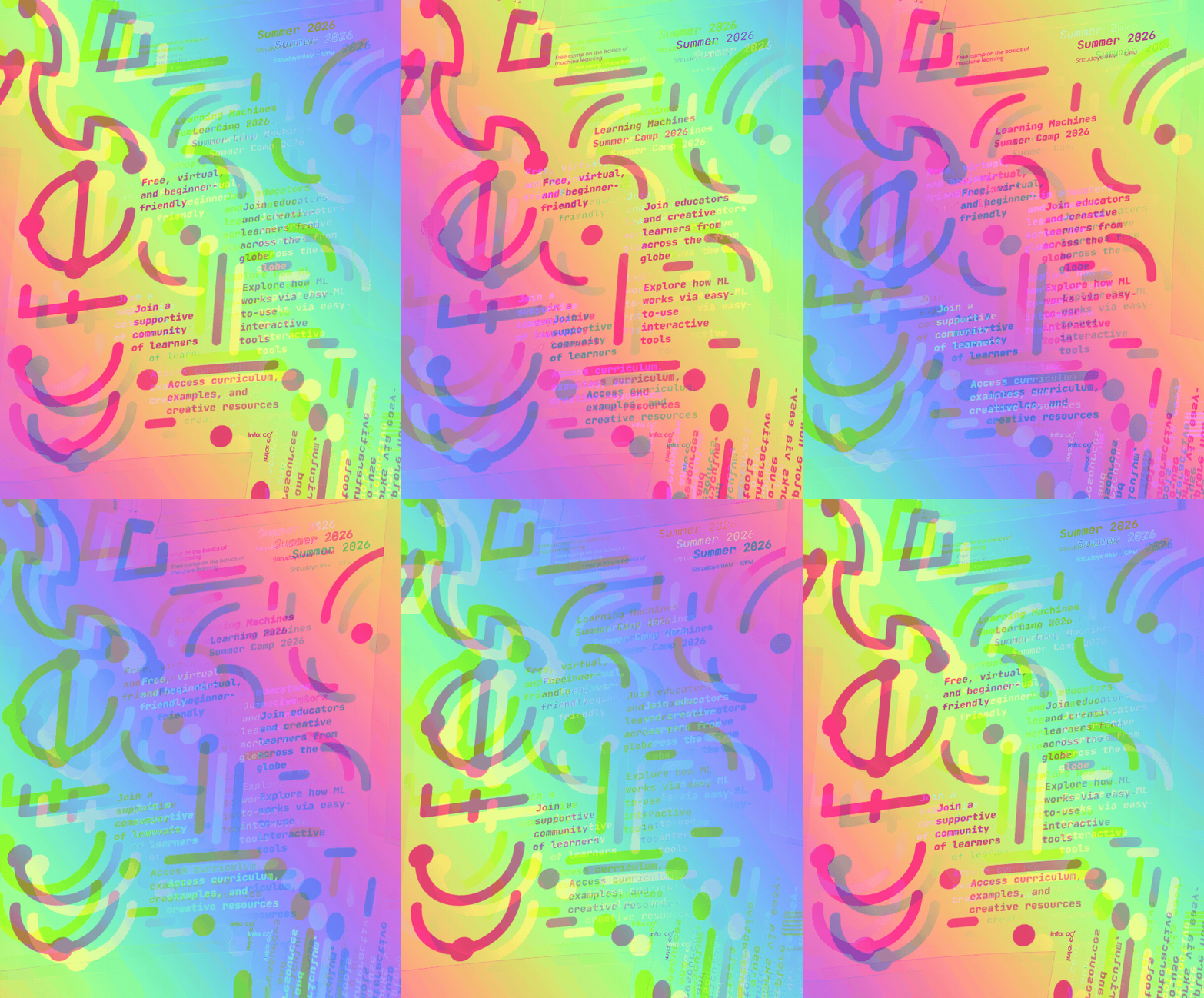
Learning Machines is a free, beginner-friendly creative AI camp for educators, artists, students, and curious learners. Across three core sessions plus an optional studio, we investigate how generative AI systems create text, images, and video.
This is much more than a prompt-engineering tutorial. It is an investigation: what is the machine actually doing, what does the human contribute, and what does the system assume?
Summer Learning Machines Camp Dates:
(9 am to 11 am PT / 12 pm to 2 pm ET / 16:00–18:00 UTC)
July 11 — Machines That Write. Tokens, prediction, temperature, and the gap between fluent output and understanding.
July 18 — Machines That Imagine. Pixels, diffusion, and the Default Test: what the machine assumes when you don't specify.
July 25 — Machines That Move. Drift, coherence, anchoring, and why video failure is evidence.
Optional studio (date tbd with the cohort) — One Thing I Made, Found, Taught, or Questioned. A low-pressure share: unfinished work, lesson sketches, investigations, and critiques all count.
Joining from outside the continental US? The has session times for Honolulu through Tokyo — and if the live time doesn't work, the async route below is a full path through the camp.
Interest form - CLOSED NOW:
Camp Interest form is closed now. Camp will be back in the future.
Ethics, Consent, and Participation Choices
AI use is optional, visible, and discussable. Participants will be able to use tools directly, analyze examples provided by the facilitator, design classroom activities, build non-generative explainers, or choose low-AI / no-AI participation pathways.
Ethical questions around creator rights, data practices, privacy, bias, attribution, environmental impact, and classroom responsibility will be treated as part of the camp rather than an add-on.
Opting out of direct AI tool use should not mean opting out of the camp.
The full policy on recordings, screenshots, participant naming, AI-generated notes, public sharing, and corrections is documented in the Consent and Recap Protocol in the repo.
Who This Is For
The primary audience is the same CC Fest community: educators, artists, creative technologists, and curious learners. No coding or machine learning background required. Familiarity with p5.js from Coding Camp is a bonus but not a prerequisite, the tools do the heavy lifting.
Participants who completed CC Fest Coding Camp will find a natural next step here: the same community, the same facilitation style, the same emphasis on making and reflecting, but applied to a different set of questions.
Full public materials, tools, worksheets, session pages, and consent protocol are available in the Learning Machines project site and my Notion repo.
Coding Camp will be back in Fall 2026. In the meantime you can read about the previous camps in Fall 2024, Spring 2025, Fall 2025, Spring 2026
WHAT DO PARTICIPANTS DO
Each session includes an unplugged activity, a mechanism demo, structured prompt experiments, evidence documentation, and reflection. Participants can use AI tools directly, analyze provided examples, design classroom activities, build explainers, or choose a low-AI/no-AI pathway.
ASYNYC/Access
Recordings: Every session is recorded for asynchronous access and shared with registered participants only. If you miss a Saturday: watch the recording, run that session's worksheet against its prompt pack of frozen examples, and bring one observation to the next session.
Access: Free, browser-based, no accounts. Almost every tool is a simulation — no paid AI subscription is ever required, and there's a full . Opting out of direct AI use never means opting out of the camp.
Flier for Learning Machines Summer Camp 2026